During SAP Connect 2026, SAP presented its vision for autonomous enterprise performance management, or Autonomous EPM. SAP is bringing planning, forecasting, consolidation, close and disclosure management together around a single, governed data foundation: SAP Business Data Cloud.
The real shift: AI within the EPM process
But that is not the real breakthrough. The real change lies in AI assistants that do not just analyse data, but actively help coordinate the EPM process.
Much of today’s AI functionality focuses on analysing data, answering questions in natural language and generating narratives. Autonomous EPM goes a step further: AI becomes part of the process itself.
Think of:
- creating and approving new entities, projects and investments
- monitoring financial master data
- coordinating intercompany matching and reconciliation
- identifying and helping to resolve consolidation differences
- detecting material variances between actuals, budget and forecast
- updating forecasts based on actuals and changing business conditions
- translating revised targets into the planning and forecasting process
The key difference is that AI does not just analyse what happened. It increasingly helps determine what needs to happen next.
SAP Business Data Cloud as the foundation
This development is enabled by SAP Business Data Cloud as the connecting data layer, combining SAP data with financial data from non-SAP systems.
Joule Assistants can then support processes such as anomaly detection, exception handling, consolidation and disclosure. At the same time, control remains essential, with auditable processes and human supervision at the core.
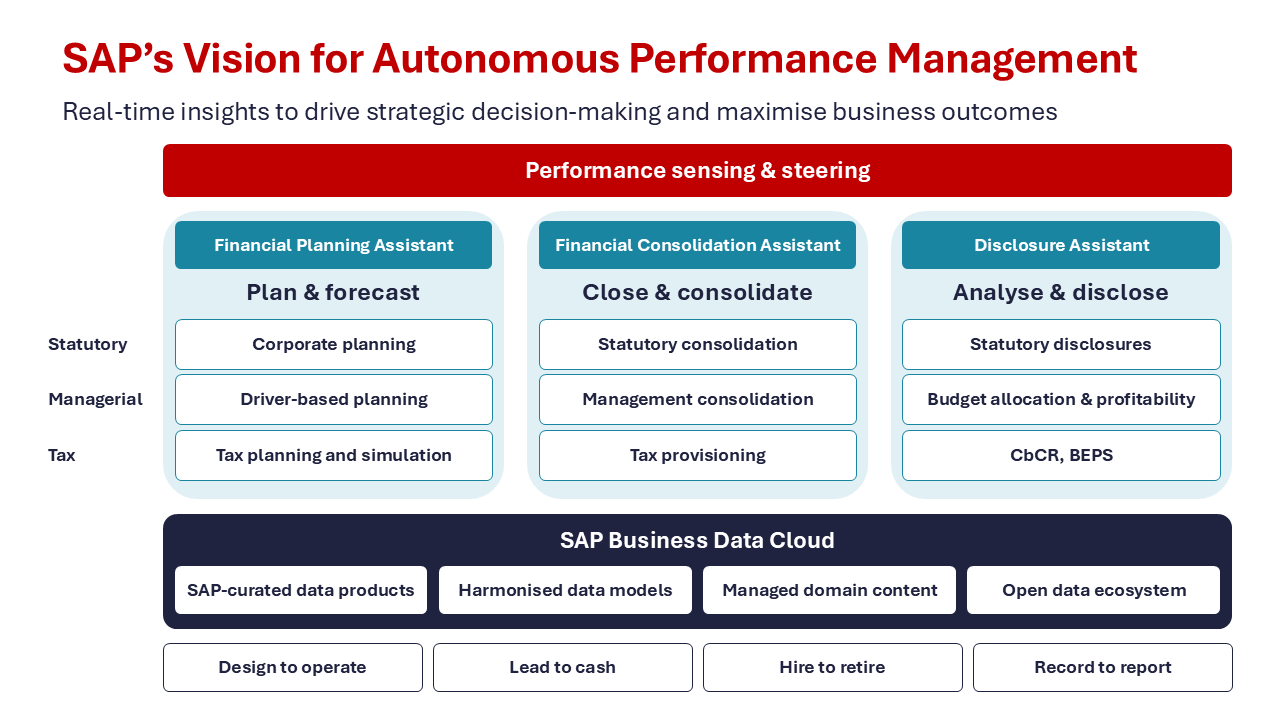
SAP is therefore not simply bringing planning and consolidation closer together. It is building an EPM environment in which AI actively participates in the execution and orchestration of performance management.
Not AI on top of the EPM process, but AI within the EPM process.
What does Autonomous EPM mean for your finance landscape?
Curious about how SAP’s new EPM approach compares with existing SAP solutions? Or how you can implement EPM not as a silo, but as an integrated part of your business processes?
Get in touch with our team at cpmview. We would be happy to discuss what these developments could mean for your organisation.